
匹诺曹
饶庆铃录视频参与海峡论坛不罚!王鸿薇点名2人轰:道歉非常廉价_我的网站

一 | AI摘要 台东县长饶庆铃因视频参会遭调查,台陆委会最终认定未违规并致歉。国民党民代王鸿薇痛批此举系政治追杀,讽刺民进党“抹红”政敌后道歉廉价。
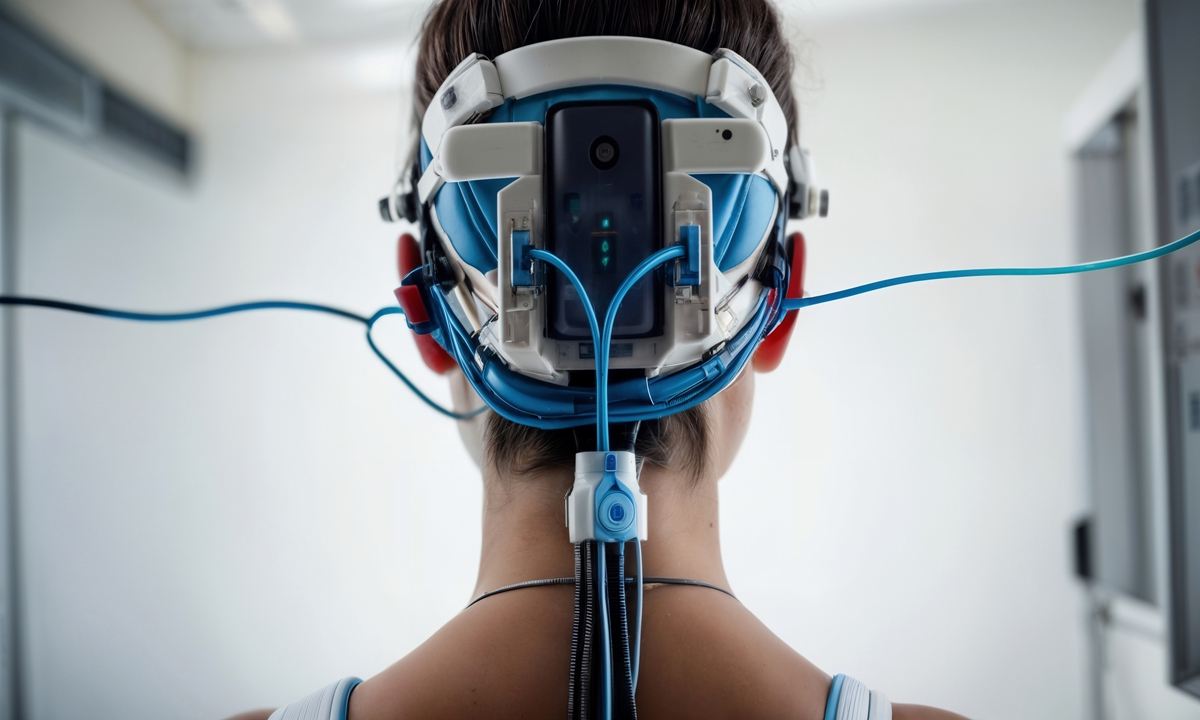
Chinese researchers have developed a multifunctional electrode coating that addresses key challenges in long-term brain-computer interface (BCI) implantation, including signal loss and tissue adhesion, bringing BCI one step closer to clinical application, the Global Times learned from the research team behind the findings on Sunday.
As an emerging field combining neuroscience and artificial intelligence (AI), BCI faces a major challenge of ensuring long-term compatibility between electrodes and brain tissue. Previous clinical trials showed that immune responses could cause implanted electrodes to retract after just three months, severely reducing signal quality and the number of available channels.
This problem stems from chronic inflammation triggered by implants, which creates insulating scar tissue around electrodes and separates them from neurons. Irreversible adhesion between electrodes and brain tissue after long-term implantation also makes device removal risky, potentially causing brain injury during follow-up surgeries.
Experiments showed that flexible neural electrodes coated with this material could operate stably in the brain for more than 300 days and could be safely removed without causing damage. This means the universal coating technology can make electrodes not only operate stably over the long term but can also be safely removed and replaced after aging, paving the way for long-term BCI applications.
Developed by the research team led by Zhang Wei at the Technical Institute of Physics and Chemistry, Chinese Academy of Sciences, associated with Beijing Tiantan Hospital, Shanghai Institute of Microsystem and Information Technology and NeuroXess, a high-tech life science company specializing in BCI technologies, the cationic alternating peptide electrode coating preserves electrode flexibility and conductivity, while offering antibacterial, anti-protein adsorption and immune-rejection-inhibiting functions.
A 300-day animal study showed the coating's effectiveness. Bare electrodes experienced a sharp loss of recording capability after 90 days of implantation and could barely detect neuronal signals after 300 days. In contrast, coated electrodes maintained stable recording channels and consistently captured neural signals above 155 microvolts.
In terms of neural modulation, after 300 days of implantation, conventional electrodes required a current of 100 microamps to induce weak limb responses, while coated electrodes triggered clear movements with only 2 microamps, improving modulation efficiency by 50 times.
Notably, the removal tests highlighted a key advantage of the coating that electrodes no longer form irreversible bonds with brain tissue. In the experiments, the coated electrodes were removed intact, with minimal damage to the surrounding brain tissue, Zhang told the Global Times on Sunday.
。 台东县县长饶庆铃6月以预录视频的方式参与海峡论坛,被赖清德当局以是否违反“两岸人民关系条例”调查。台陆委会副主委梁文杰近日声称,经台当局内务主管部门行政调查及相关主管部门会商后,认定饶庆铃的发言内容并未涉及政治议题,决定不予处分。台陆委会主委邱垂正也坦言,饶庆铃这段时间“受到一些委屈”。

二 | 国民党民代王鸿薇对此表示,对比之前大动作的政治追杀,后面的道歉非常廉价。 王鸿薇22日在脸书提到,饶庆铃今年6月仅透过录视频参加海峡论坛,推广台东农产品包括“凤梨释迦”,遭到台陆委会政治追杀,认定违反“两岸人民关系条例”,并要台内务主管部门查处。日前经认定,饶庆铃并无政治性发言,内容纯粹着眼于农民生计,判定未违规。台北市长蒋万安立刻要求台陆委会应该向饶道歉,梁文杰还死性不改说别人“管太宽”,结果邱垂正在致词时表示“饶县长受委屈了!”并致歉。 王鸿薇直言,当县市“父母官”为人民生计奔走时,民进党绿官为了意识形态,把别人通通“抹红”,心里没有人民。难怪梁文杰会说出“凤梨释迦是台湾人几乎不吃”,让苦撑的农民再一次受伤,后面出来致歉还被讽“少上酒店”。 王鸿薇痛批,邱垂正、梁文杰两人加起来,台湾陆委会已经两次道歉。

三 | 不过对比之前大动作的政治追杀,后面的道歉非常廉价。王鸿薇讽刺,整天“抹红”政敌,翻车就“大街骂人,小巷道歉”,民进党是标准的选举无赖,早就被台湾民众看清了。
Current article:http://j6tet.zuanniangwandangliaolinechu.sbs/list_jjc3t/hln.ppt
Published on:17:38:53
 出发吧爱情
出发吧爱情 速度与激情6